Description
Aftimoon / Dodder (افتیمون)
Aftimoon (Dodder) is a traditional botanical ingredient associated in South Asian herbal literature with Cuscuta reflexa Roxb. It is a distinctive parasitic climbing plant recognized by its slender, twining stems that grow over and around a host plant.
Aftimoon has a longstanding place in Unani compound formulations. At Maqsood Herbal, we emphasize clear botanical identification, appropriate product handling, and responsible presentation of traditional herbal materials.
Traditional applications and scientific research should be distinguished from established clinical evidence. Dried Aftimoon should not be presented as a guaranteed treatment for a diagnosed disease or medical condition.
This product description refers specifically to Cuscuta reflexa, as specified for this product. Since the common term “Dodder” can refer to different species, the botanical identity and supplied plant part should always be confirmed.
What Is Aftimoon?
Aftimoon is the commonly used Roman spelling of افتیمون. It should not be confused with the English word “afternoon.”
The product described here consists of dried aerial material of Cuscuta reflexa rather than a separately specified Dodder seed product.
Depending on harvesting, cutting, and preparation, dried Aftimoon may contain:
- Slender and intertwined vine stems
- Cut or fragmented aerial material
- Attached flowers or other aerial structures
- Naturally variable yellowish, brownish, or darker dried material
The exact contents should correspond with the applicable supplier or batch specification. Colour and appearance alone cannot confirm botanical identity, purity, or quality.
Botanical Identity
English Name: Dodder
Urdu Name: افتیمون
Roman Name: Aftimoon
Scientific Name: Cuscuta reflexa Roxb.
Family: Convolvulaceae
Product Part: Dried aerial material; confirm the applicable batch specification
Product Type: Traditional Botanical Raw Material
Some older botanical references classify Dodder under a separate family known as Cuscutaceae. Modern classifications commonly place Cuscuta within the Convolvulaceae family.
Why Species Identification Matters
“Dodder” is a general name used for plants belonging to the genus Cuscuta. It does not identify one particular species.
Different Dodder species may differ in:
- Traditional applications
- Chemical constituents
- Preparation methods
- Traditional quantities of use
- Available safety information
- Research findings
For example, Cuscuta reflexa and Cuscuta epithymum are different species. Research involving the seeds or extracts of another Dodder species should not automatically be applied to dried Cuscuta reflexa vine material.
For this reason, Maqsood Herbal recommends confirming the species and plant part before medicinal use.
A Parasitic Vine: Understanding Its Growth
Dodder is a parasitic plant that grows in association with a host plant. Its characteristic twining growth allows it to attach to the host and obtain resources.
This unusual growth habit contributes to the naturally intertwined appearance of dried Aftimoon.
Because the plant grows over other vegetation, harvested material may potentially contain pieces of the host plant or other unwanted vegetation. Appropriate collection, sorting, and quality assessment are therefore important.
The host plant and collection conditions may also be relevant when evaluating botanical raw material. Its parasitic growth habit does not, by itself, establish medicinal effectiveness or safety.
Traditional Unani Importance
Aftimoon has been described in Unani literature as an ingredient used in selected compound preparations. Traditional descriptions may discuss the herb according to historical concepts such as temperament and humoral balance.
These historical concepts should be understood within the context of traditional medicine and should not be converted into unsupported modern medical claims.
For example, traditional descriptions should not automatically be presented as evidence that Aftimoon “detoxifies the blood,” “cleanses the brain,” or treats a specific disease.
A compound Unani formulation should also be considered as a complete formulation, rather than assuming that the historical use of a formulation proves the same effect from Aftimoon used alone.
Digestive Applications: Traditional Context and Research
Historical and scientific literature has examined Cuscuta reflexa in relation to certain digestive and vomiting-related applications. Experimental research has also investigated gastrointestinal effects using specific preparations.
However, such findings do not establish ordinary dried Aftimoon as a proven human treatment for nausea, vomiting, digestive disorders, or other gastrointestinal diseases.
The preparation, extraction method, concentration, experimental model, and conditions of each study are important when interpreting scientific evidence.
Persistent vomiting, severe abdominal pain, dehydration, blood in vomit, or other serious symptoms require appropriate medical assessment rather than self-treatment with herbal products.
Nervous-System and Emotional-Wellness Claims
Aftimoon may appear in traditional formulations associated with certain nervous-system or general wellness applications.
However, traditional descriptions should not be interpreted as proof that raw Aftimoon treats:
- Anxiety
- Depression
- Epilepsy
- Memory disorders
- Neurological diseases
Such conditions require appropriate medical assessment and professional care.
Aftimoon should not be used as a replacement for prescribed neurological or psychiatric medicines, and prescribed treatment should not be stopped or changed because of information presented on an herbal product page.
Kidney and Urinary Research
Scientific researchers have investigated Cuscuta reflexa extracts in experimental animal models, including research related to kidney-stone formation.
Such findings involve specific extracts and animal experiments. They do not establish that commercially supplied dried Dodder removes kidney stones, treats urinary obstruction, or restores kidney function in humans.
Accordingly, Aftimoon should not be promoted as a replacement for professional treatment of:
- Kidney disease
- Kidney stones
- Urinary obstruction
- Urinary infections
- Other significant urinary conditions
Hair and External Preparations
Dodder may also be encountered in traditional external or hair-care preparations.
Its historical use in these preparations does not establish proven hair-growth or hair-restoration benefits.
The suitability and safety of an external herbal preparation depend on its complete formulation, concentration, cleanliness, preparation method, and intended application.
Raw dried Aftimoon should not automatically be assumed suitable for direct application to the scalp, broken skin, wounds, or infected areas.
Natural Constituents and Scientific Interest
Laboratory research has examined Cuscuta reflexa stem extracts for various chemical and biological characteristics, including measurements involving phenolic and flavonoid compounds as well as experimental antioxidant and antimicrobial activity.
These laboratory findings relate to specific extracts and controlled experimental conditions. They should not be interpreted as proof that ordinary dried Aftimoon provides guaranteed antioxidant effects or treats infections in humans.
Commercial raw material should not be described as standardized unless appropriate analytical information supports such a claim.
Dried Herb, Seeds, Powder and Extract Are Different
Dried Herb: Aerial vine material supplied whole or cut.
Seeds: A separate plant part that requires its own botanical identification and product specification.
Powder: Ground plant material where visual identification can become more difficult.
Extract: A preparation produced through an extraction process that may concentrate certain constituents.
These forms are not automatically interchangeable. Information concerning Dodder seeds or a concentrated extract should not be directly transferred to dried Cuscuta reflexa vine material.
Quality Considerations
When selecting dried Aftimoon, useful quality checks may include:
Correct Species: Confirmation that the material is Cuscuta reflexa.
Correct Plant Part: Clear identification of whether the supplied material consists of aerial parts, seeds, or another specified form.
Host-Material Assessment: Attention to unwanted pieces of the host plant or other vegetation.
Cleanliness: Material should be reasonably free from unnecessary soil, debris, and foreign matter.
Appropriate Dryness: The material should not show unusual dampness or excessive moisture.
Sound Condition: Material should be checked for visible mould, insect infestation, or significant deterioration.
Traceable Information: Reliable supplier information and applicable batch or product specifications are useful for quality assessment.
Appearance alone cannot establish purity, chemical composition, or medicinal safety.
How to Use Aftimoon
Aftimoon is a traditional botanical raw material. Medicinal use should be guided by a qualified healthcare professional or registered practitioner who can consider the correctly identified species and intended preparation.
There is no single universal self-use quantity that is appropriate for every person or every Aftimoon product.
Professional guidance should take into account:
- Botanical identity
- Supplied plant part
- Intended purpose
- Preparation method
- Other ingredients in the formulation
- Age and general health status
- Existing medical conditions
- Current medicines
- Frequency and duration of use
Experimental animal quantities should not be converted into household doses.
Precautions and Responsible Use
Reliable human evidence concerning the appropriate dosing, long-term use, and potential medicine interactions of Cuscuta reflexa remains limited.
Seek professional advice before medicinal use if you:
- Take prescription medicines
- Have a significant or chronic medical condition
- Are considering use for a child
- Have previously experienced reactions to herbal ingredients
- Plan to use a concentrated herbal preparation
The absence of a documented interaction does not prove that an herbal product is compatible with every medicine.
Discontinue use if an unexpected reaction occurs and seek appropriate medical care for serious symptoms, including facial or throat swelling, breathing difficulty, or other signs of a severe allergic reaction.
Pregnancy and Breastfeeding
The safety of medicinal Cuscuta reflexa preparations during pregnancy and breastfeeding has not been sufficiently established.
Avoid self-directed medicinal use during pregnancy or breastfeeding unless advised by an appropriately qualified healthcare professional.
Aftimoon should not be promoted as a product for inducing menstruation, stimulating labour, or managing pregnancy-related complications.
Storage Instructions
Store dried Aftimoon in a clean, cool, dry place inside a tightly closed container.
For better preservation:
- Protect from moisture and humidity.
- Keep away from direct sunlight.
- Avoid excessive heat.
- Use clean and dry utensils when handling the product.
- Close the container securely after use.
- Protect the material from insects and contamination.
- Keep it separate from strongly scented materials.
- Keep out of the reach of children.
- Do not use material showing mould, infestation, unusual dampness, or significant deterioration.
Always follow any storage, batch, or expiry information supplied with the product.
Buy Aftimoon / Dodder in Pakistan
Maqsood Herbal provides traditional herbal products and botanical raw materials for customers seeking appropriately identified Aftimoon / Dodder material.
When purchasing Aftimoon in Pakistan, customers should confirm:
- Botanical species
- Supplied plant part
- Product form
- Pack weight
- Material condition
- Available product specifications
For enquiries, contact Maqsood Herbal to confirm current availability, pricing, pack sizes, and applicable product specifications before ordering.
Product Information
English Name: Dodder
Urdu Name: افتیمون
Roman Name: Aftimoon
Scientific Name: Cuscuta reflexa Roxb.
Family: Convolvulaceae
Product Part: Dried aerial material; confirm the applicable batch specification
Product Type: Traditional Botanical Raw Material
Important Note
Confirm the Dodder species and supplied plant part before use. Traditional applications and experimental research should not be interpreted as guaranteed human health benefits. This product information does not replace professional diagnosis, medical advice, or appropriate treatment.

 Herbs & Jari Booti20 products
 Herbal Powders10 products
 Seeds & Tukhm7 products
 Spices & Pansar13 products
 Herbal Oils20 products
 Pure Honey1 product
 Murabba Jaat7 products
 Achar & Pickles3 products
 Dry Fruits & Superfoods4 products
 Herbal Tea & Qehwa9 products
 Tibb-e-Nabwi6 products
 Skin & Beauty13 products
 Hair Care14 products
 Pure Honey (Khalis Shehad)From Rs 2,500
 Kalonji Oil (Roghan Kalonji)From Rs 640
 Kashmiri Saffron (Zafran Kashmiri)From Rs 850
 Amla MurabbaFrom Rs 1,080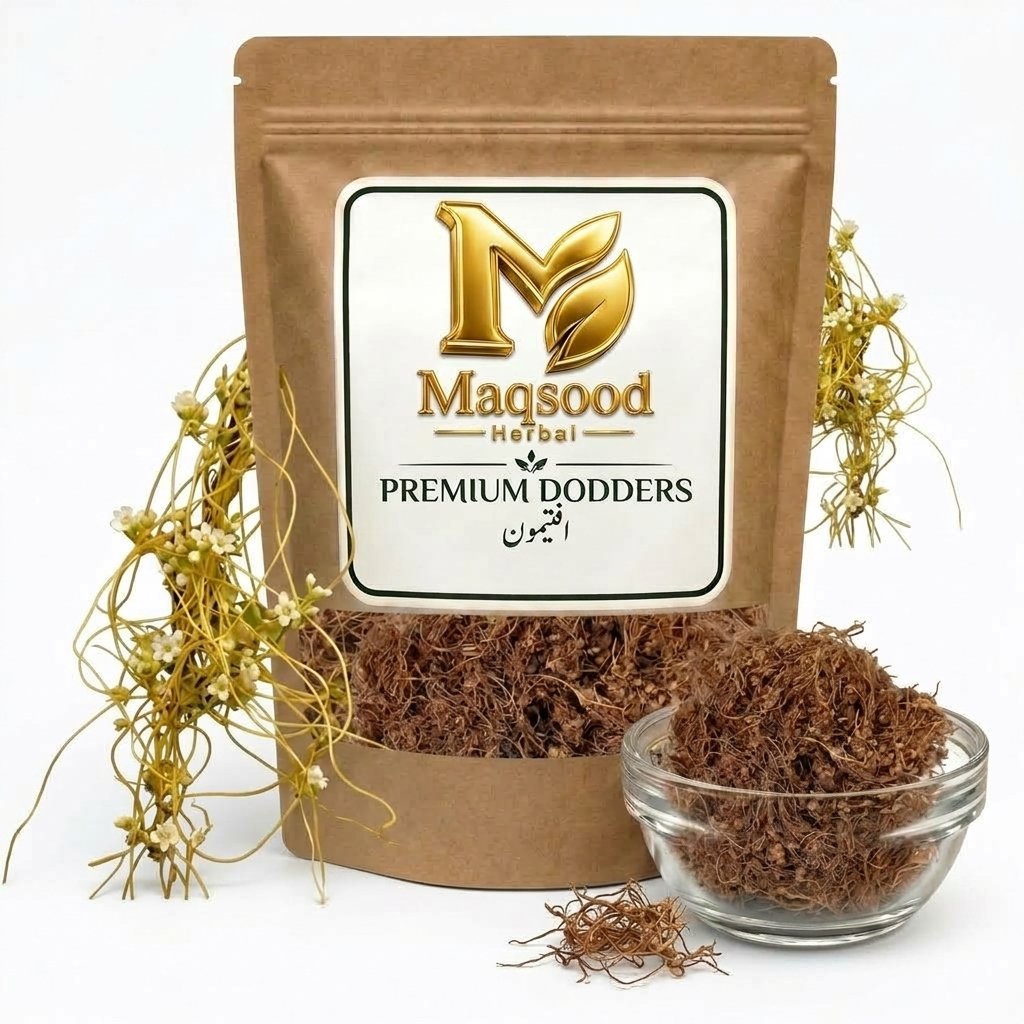
Reviews
There are no reviews yet.